

Forest Health Monitoring Program (FHMP)
Maintaining the ecological integrity of County Forests requires a proactive and adaptive approach to monitoring forest health. The FHMP is designed to assess forest ecosystem conditions, detect emerging threats, and guide timely management interventions.
Objectives:
- Track forest health trends over time using standardized indicators
- Identify and respond to biotic and abiotic stressors, including invasive species, pests, diseases, drought, and storm damage
- Support sustainable forest management by integrating health data into planning and operational decisions
- Engage stakeholders through transparent reporting and collaborative monitoring efforts
The FHMP will use a combination of field surveys, remote sensing, a citizen science to collect data on issues and plan accordingly.
Framework:
- Tree vitality
- Regeneration success and species composition
- Presence and impact of invasive species
- Soil and water quality indicators
- Wildlife habitat condition and biodiversity metrics
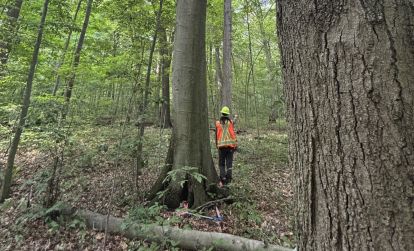
Monitoring plots established across representative forest types and age classes will be measured annually or biennially, depending on the indicator and risk level.
Findings will be summarized in a periodic State of the Forest Report, which will:
- Highlight key trends and emerging issues
- Recommend management actions
- Inform updates to the Forest Management Plan and operational schedules
Where significant threats are identified, rapid response protocols will be activated in coordination with local Conservation Authorities, the OMNRF, and other partners
With the results of this ongoing program, the FHMP will complement other initiatives such as Invasive Species Management, Silviculture and Timber Harvest Planning, and Biodiversity Conservation.