

Garlic Mustard (Alliaria petiolata) spreads commonly along trails in woodlands and poses threats to County and private forest through unsuspecting spread via hiking. It is important to clean your gear before exploring new areas. Once a plant begins to grow and spread seed and its chemicals, it can spread off a trail deep into the woods. The chemical it releases prevents any other plants from growing and eliminates biodiversity on the forest floor.
Garlic Mustard (Alliaria petiolata) is an invasive plant native to Europe that was brought to America as an edible herb. It has since taken hold in the wild and is an aggressive invader, outcompeting native plants and threatening biodiversity. It is most observed along roadsides, trails, and fence lines. It takes hold quickly and can become the dominant plant in the understory. It takes over areas by dispersing chemicals into the soil that prevent other plants and grasses from growing.
Identification:
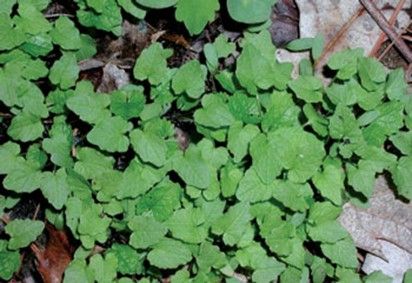
Leaves on first-year plants are dark green, kidney shaped, with scalloped edges. The leaves of Garlic Mustard (Alliaria petiolata) give off a strong garlic odour when crushed.

Second-year leaves are triangular and sharply toothed. Second-year plants produce white small white flowers.
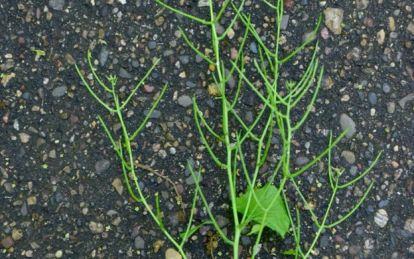
The seed pods contain multiple small black seeds and drop in mid-late summer.
More Information